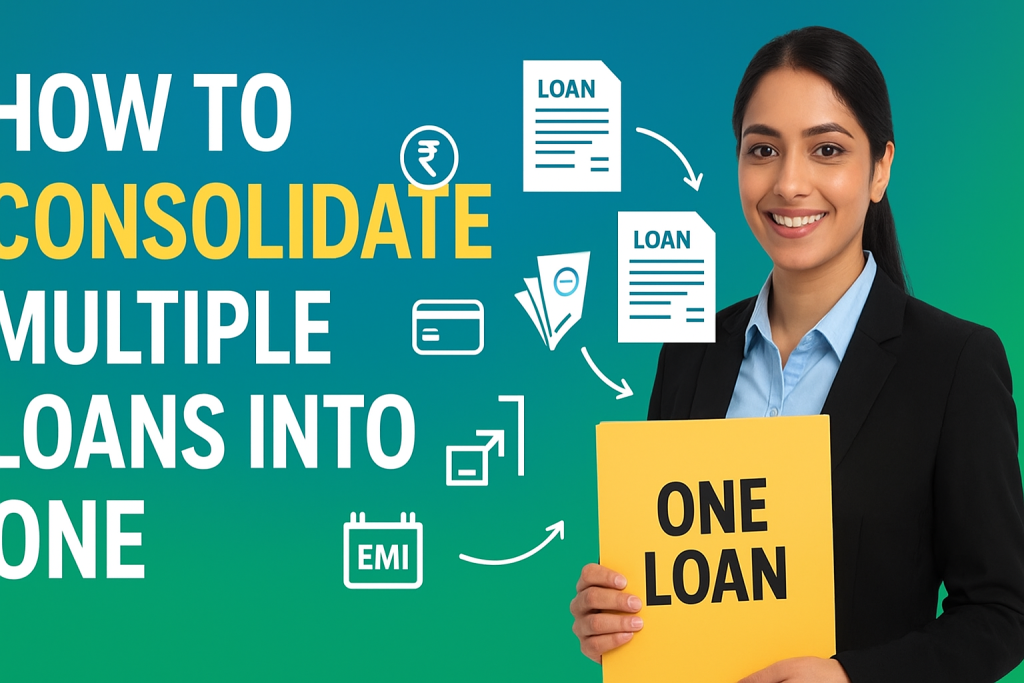

Managing multiple loans—personal, credit card, car loan, or education loan—can feel overwhelming. Different due dates, varying interest rates, and multiple EMIs can lead to confusion, missed payments, and high interest outflow. That’s where loan consolidation comes in.
In this blog, you’ll learn:
- What is loan consolidation?
- How it works
- Who should consider it
- Benefits and drawbacks
- Step-by-step process to consolidate your loans smartly
🔄 What Is Loan Consolidation?
Loan consolidation means combining two or more existing loans into a single new loan—usually at a lower interest rate or with a longer repayment period. This simplifies your finances by giving you one EMI, one lender, and one due date to manage.
✅ Who Should Consider Loan Consolidation?
You should think about consolidating loans if:
- You’re juggling multiple EMIs with different due dates
- You’re paying high interest rates (especially on credit cards)
- You want to simplify monthly finances
- You’ve missed payments and want to avoid further penalties
📋 Types of Loans You Can Consolidate
- Personal Loans
- Credit Card Dues
- Payday Loans
- Consumer Durable Loans
- Education Loans
- Medical Loans
💡 Benefits of Loan Consolidation
- ✅ Single EMI: Easier to manage than multiple repayments.
- 💰 Lower Interest Rates: You might save on overall interest.
- ⏳ Extended Tenure: Reduces your EMI burden.
- 📈 Improves Credit Score: Regular EMI payment builds credit health.
- 🔒 Avoids Default: Better financial control reduces default risk.
⚠️ Drawbacks to Watch Out For
- 📈 Longer tenure = more interest paid overall
- 💸 Processing fees or prepayment charges may apply
- ❌ If your spending habits don’t change, you might fall into debt again
📝 How to Consolidate Multiple Loans – Step-by-Step Guide
Step 1: Make a List of Your Loans
- Note the amount, EMI, tenure, and interest rate of each loan or credit card due.
Step 2: Check Your Credit Score
- A good credit score (700+) helps get better consolidation loan offers.
Step 3: Compare Consolidation Options
You can consolidate using:
- Personal Loan: Take a larger personal loan to pay off existing smaller loans.
- Balance Transfer on Credit Cards: Shift high-interest dues to a card with 0% interest for a limited time.
- Top-Up Loan: Use your existing loan account to get additional funds.
- Loan Against FD/Insurance/Property: These offer lower interest but require collateral.
Step 4: Choose the Right Lender
- Compare offers from banks, NBFCs, and loan apps for the best interest rate and terms.
Step 5: Apply & Clear Old Loans
- Apply for the new consolidated loan and use the disbursed amount to pay off old loans.
- Ask lenders for loan closure letters.
Step 6: Start Fresh with One EMI
- Set auto-debit or EMI alerts to stay on track.
- Avoid taking fresh loans unless necessary.
🧮 Example
Let’s say you have:
- Personal Loan EMI: ₹6,000
- Credit Card EMI: ₹4,500
- Education Loan EMI: ₹3,500
Total = ₹14,000 across 3 lenders
Instead, consolidate into one loan with a new EMI of ₹10,000 and save ₹4,000/month.
🧠 Tips for Successful Loan Consolidation
- Don’t consolidate if the new loan has a higher interest rate.
- Always calculate total cost including fees.
- Keep your spending in control to avoid new debt.
- Use loan calculators before deciding.
🧾 Conclusion
Consolidating multiple loans into one can bring financial clarity, lower EMI pressure, and peace of mind—but only if done wisely. Always compare lenders, read the fine print, and build a budget so you can enjoy the full benefits of consolidation without falling into another debt trap.